Dear brothers and sisters,
In the responsorial Psalm, we have sung, “Let us go rejoicing to the house of the Lord” (cf. Ps 122). Today’s liturgy invites us, therefore, to walk together in praise and joy towards the encounter with the Lord Jesus Christ, King of the Universe, gentle and humble Sovereign, the One who is the beginning and end of all things. His power is love, his throne the Cross, and through the Cross his Kingdom shines forth upon the world.
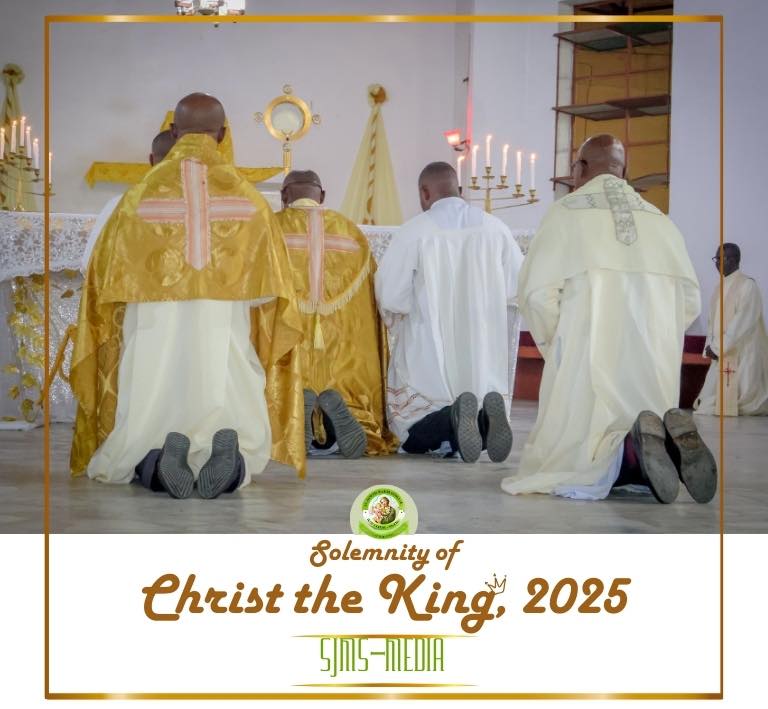
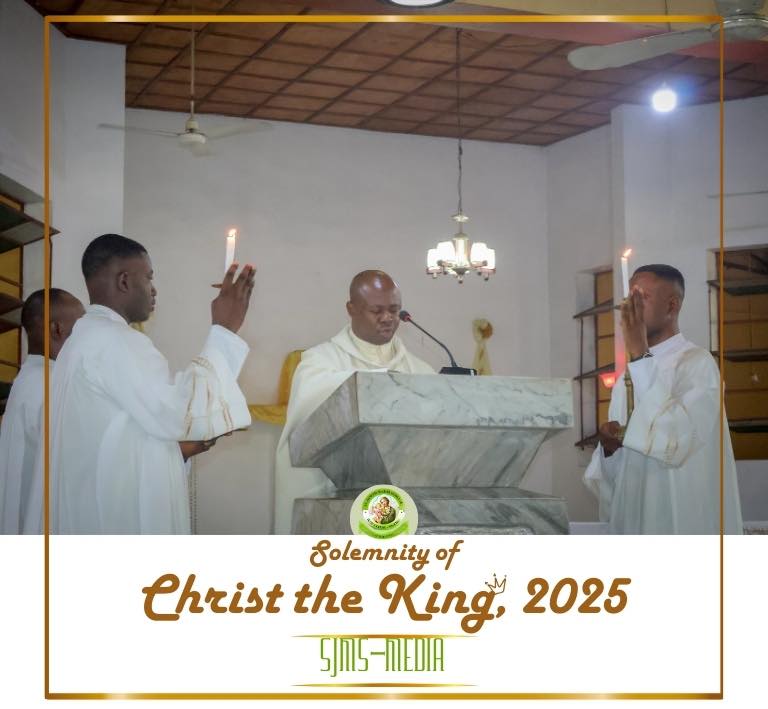
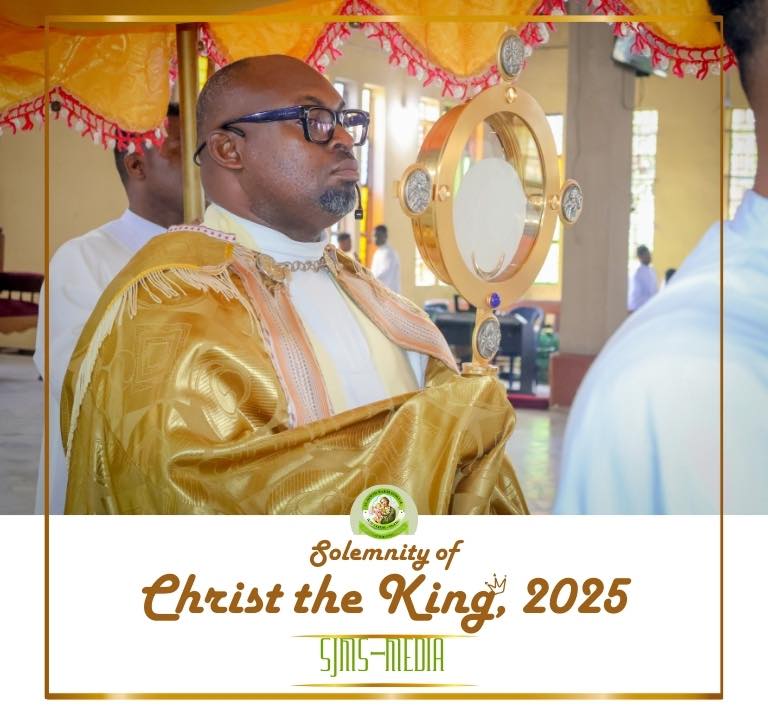
In the first reading of today, 1st Reading— 2nd Sam: 5:1-3, all the elders of Isreal came to the king at Hebron and King David made a pact with them at Hebron in the presence of the Lord and they anointed David King of Isreal.
The 2nd Reading highlights the characteristics of his kingdom – Col 1:12-20- In his kingdom, there is peace and love- In His kingdom we gain freedom and forgiveness of sins. – He pre-existed everything- Thrones, Dominions, Dominations, sovereign ties, powers- all things were created through him and for him.
In the Gospel—- Luke 23:35-43- A king whose throne was the cross; instead of a golden crown, he had a crown of thrones.- instead of the fine wine in a golden chalice, they thrust vinegar to him.- instead of cheers, they mocked and jeered.- Above him hung an inscription: “This is the king of the Jews”. “Remember when you come with your kingdom”, only a king can admit people into his kingdom and as such granted the wish of the thief.
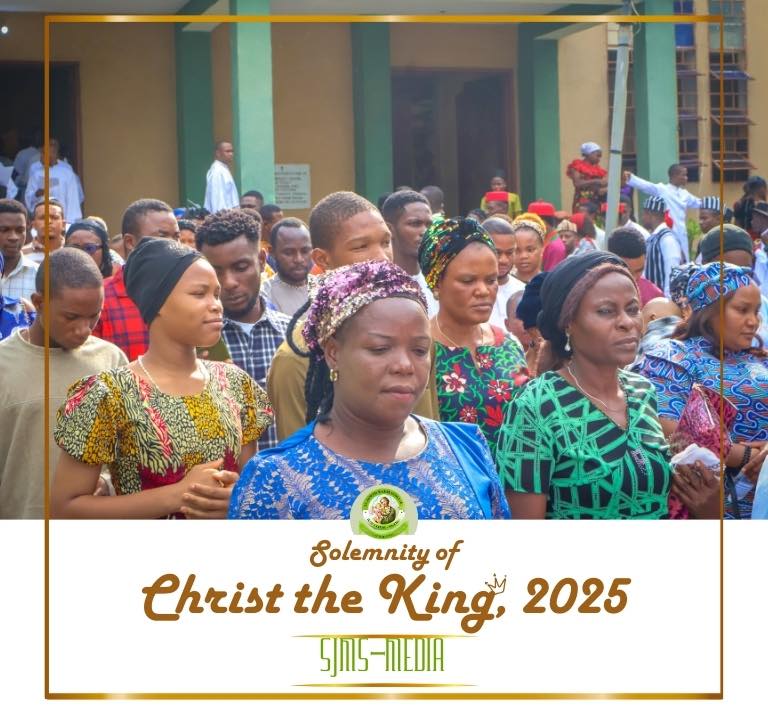
In our collective imagination, the figure of the king is always associated with the throne on which he sits to exercise his power to judge and legislate. Jerusalem, with its temple was the seat of the king.- Pope Pius XI proclaimed the solemnity of Christ the King with the encyclical QUASPRIMAS 100yrs.- Pius XI was brilliant in presenting the world with the figure of Jesus as King, reminding everyone that the kingship God proposes is one of service and love, not of authority and power.- Christ, whom we invoke as King this Sunday, becomes a model for the powerful of all times. This solemnity celebrates Christ himself. He declared himself king before Pontius Pilate, who had asked him if he were king. Jesus answered without hesitation, “Yes, I am king”. So much so that the inscription Pilate affixed to Jesus’ head read; Jesus of Nazareth, king of the Jews (INRI). A kingship established in his death sentence. His kingship was not worldly, but spiritual, moral and religious. His kingdom is from above. His kingdom is a constant search for peace, justice and the truth of justice. To the thief, he demonstrated that he is a king who gave and sacrifices himself for the salvation of others.
A king who does not promise positions, money, land, career, and success but ensure paradise. Christ is the real king because of who he is. He is the image of the invisible God. He died on the cross for us and so he will be king of our lives. As the real king, not just the king of the Jews but King of kings, He commanded Lazarus back to life and he lived, He commanded the devil’s, they obeyed, He commanded the wind and the sea and they calmed down. His kingship is different; while worldly kings celebrate enthronement on golden or ornamented thrones, we read about our King on the cross.
Some years ago, divers discovered 400 years old sunken ship off the coast of Northern Ireland. Among the treasures, they found the ship was a man’s wedding ring, on which was engraved a hand holding a heart with the inscription: I have nothing more to give you. Of all the treasure found on the sunken ship, none moved the divers more than that ring and its beautiful inscription. The engraving on that ring and its inscription could have been placed on that cross of Christ for he gave us everything he had when he died on it, by which “we have redemption and forgiveness of sins” (Col 1:14). Jesus as King is not out to dominate, but to love, not out to rule but to serve; not out to order, but to seek out the lost ones such as the repented thief on the cross assuring him “today you will be with me in paradise”.
Hence, like the tribes- peoples who gathered at Hebron of Old to acclaim David as their King (2 Sam 5:1-4), so we too can now ask Jesus to be the Lord and King of our lives. Not to a throne, a golden palace or triumphant scene of power and splendor. Instead, we stand beneath the cross.
Christ the King means he is the King of hearts, not palaces, he reigns through truth and love. His kingdom grows whenever we forgive. At the end of the year, we look to the future, for this King is not of the past.